Showing posts with label organic. Show all posts

Tuesday, July 15, 2014

Soothing Body Balm, with Lemon & Lavender

 Natural, soothing body balm
I have fairly dry skin, especially in the winter. I used to slather my face with Vaseline before bed, but wanted to find a non-petroleum alternative (FYI, aquaphor is 41% petrolatum). I began experimenting, trying many formulas and ingredients, and this is my official "Becky's Body Balm" recipe. It is soothing, moisturizing, and chock-full of great stuff for your skin!

I started out making it as just a blend of oils, but it was too....oily. The beeswax helps a lot. If you make your own, experiment with varying proportions of ingredients to suit your taste and/or budget. 

The basic recipe is 1 part beeswax, 1 part coconut oil, 1 part shea butter, and 1 part a mix of olive/sweet almond/jojoba oils. I also add some raw cocoa butter, pure Vitamin E oil, and essential oils.

Step One: set up a double boiler. Mine is just a stainless steel bowl set over a saucepan filled with water. I turn it on to medium, but then keep it low once the water has heated up.

beeswax
Step Two: Add beeswax; I like these little pellets. Keep an eye on it and, when the beeswax melts, you'll probably want to lower your heat.

coconut oil
Step Three: Add coconut oil. I try to put in the things that can take a higher heat first, so the heat will only go down from here!

raw cocoa butter
Step Four: Add raw cocoa butter. This is what it looks like, if you've never seen it before, and yes, it does smell like chocolate. 

cocoa butter
I was so excited when I first got my cocoa butter that I decided to make something with only cocoa and shea butters, but what began as a "deliciously chocolate" aroma was so overwhelming after heating/cooling in my kitchen for a few hours that I actually became nauseated. Now I only add a small amount (as you can see above).

Shea butter
Step Five: once all of that has melted well while I mix gently, I turn off the heat completely and add in the shea butter. Shea butter can range naturally in color from a more ivory to a yellow color but it's never pure white in color. What I'm using in this picture is actually Shea Butter’s fraternal twin, Kpangnan Butter (sometimes called Golden or Yellow Shea), and is very similar in quality to shea...it's a good substitute if you can't find shea.

Step Six: add in olive oil, sweet almond oil, and jojoba oil.

body balm
Step Seven: Remove bowl completely from the saucepan and stir regularly. If you have a stand mixer with a paddle attachment, I think it would be ideal to use here on a really low speed, but I don't have one. I set my bowl on a towel stir it very regularly. Once it begins to firm up at all around the edges/top, stir continuously. This is very important to ensure a smooth, even consistency.

Once I can see it getting firmer/thicker, I add the Pure Vitamin E oil and any essential oils. Currently, I use tea tree oil, and lemon/lavender essential oils until I like the smell.


Lemon & Lavender essential oils in Body Balm
Once it has cooled down and smoothed out, pour into your container of choice and use/share! This is a great way to reuse old body butter containers. Jelly jars also are an affordable/convenient option. I recently found a great source for these little tins, which are wonderful for the Body Balm.

I use this on my face and body every day. It is terrific for dry, cracked hands in winter, and for soothing skin in summer. Not everyone can handle the emollients on their face, but I don't know anyone who doesn't like it for knees, elbows, or ankles. I am experimenting with adding some zinc oxide to the mix for a mild barrier sunblock, and thus far I like the results! I'll keep you posted.

Go forth, and make your own!!


Tuesday, June 3, 2014

Joyous Southern Spring: Garden Tour May/June 2014

Peas in garden
Peas
After the longest, coldest, loneliest winter in a long time, Spring has been truly welcome here South of Sunnybrook. I started lettuces from seed, but got most of my peas in later because of all the late freezes. Lesson learned: plant peas anyway, most of them will survive if they're mulched. Plus, pea seeds are cheap (I plan to save some this year also)!

Garden harvest - strawberries, spinach, oregano, lettuces
Harvest
Spinach, basil, strawberries, and lots of lettuces (like the ones in my Teacher Appreciation bouquets) have been devoured by the family. We've been listening together in the car to the audiobook Animal, Vegetable, Miracle: A Year of Food Life (which is the book that first inspired me to try cheesemaking and join a CSA), and I think it's inspired appreciation in my children. It is truly wonderful to hear them go on and on about how "nothing tastes so wonderful as a good, fresh strawberry you pick yourself."

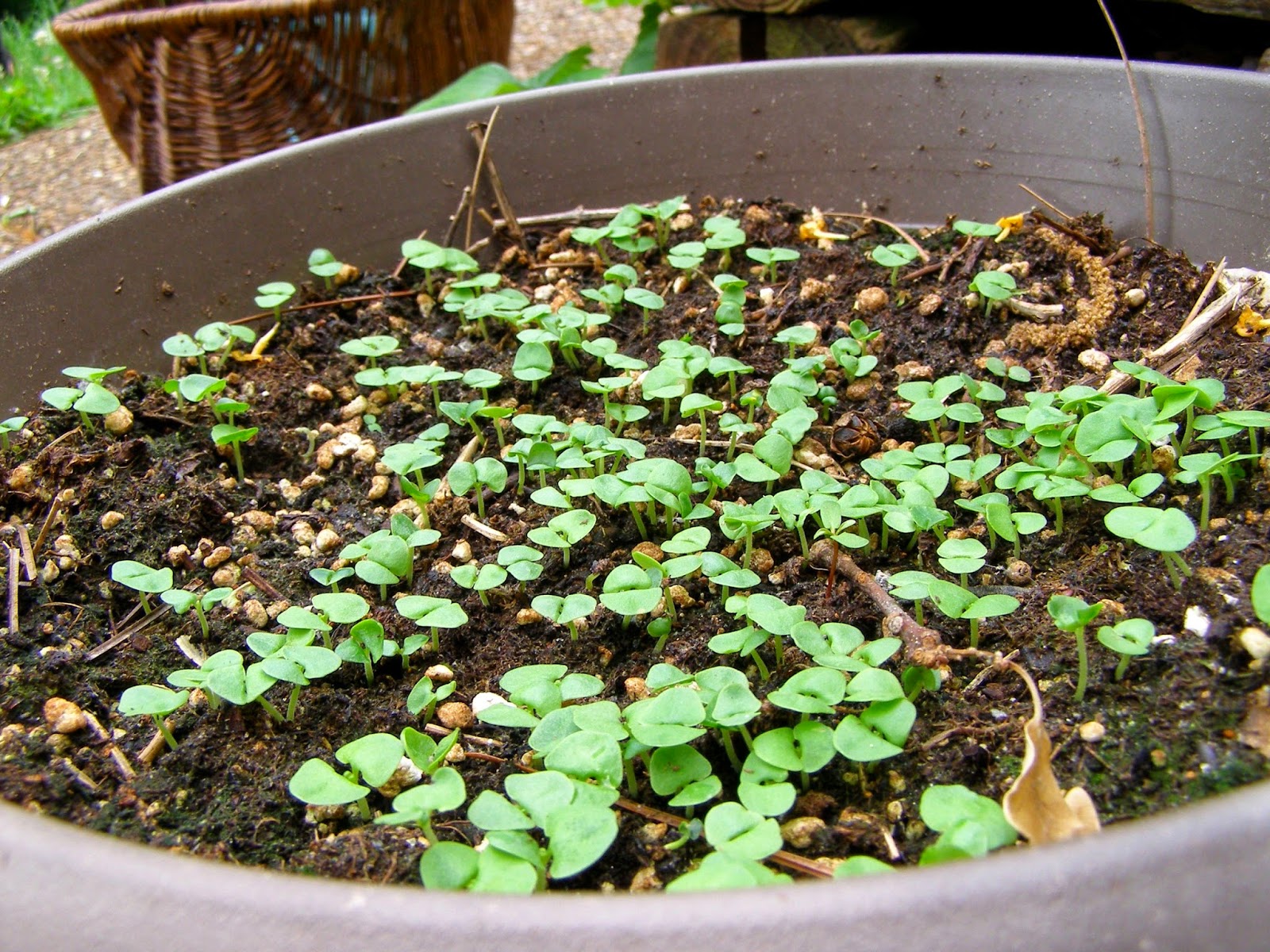
Basil Seedling Nursery
Baby Basil
For the last two years, I've planned to start various herbs, veggies, and flowers throughout the summer, so as to have filler for bare spots as I harvest, and to have lots of sets for fall veggies (which need to be planted in September-ish). I never do it though. In January, making paper pots filled with earth and seed is like planting hope, but in July I don't want to sit at the table...there is too much to do outside. 

So I am starting things in large pots, like the basil above, and will thin them and move them to the garden. I also have some German Chamomile and chives started this way, and plan to keep things growing throughout the summer.

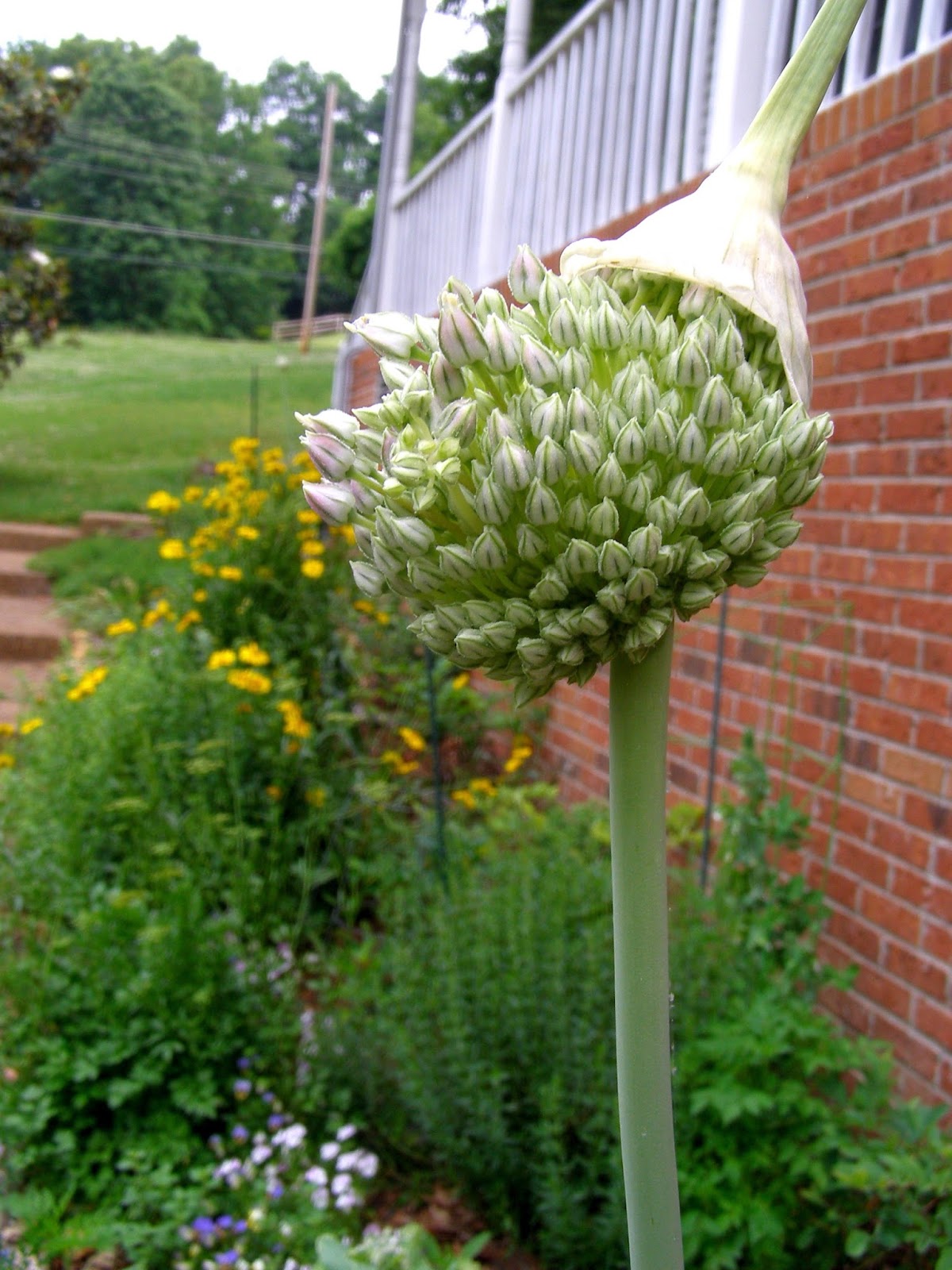
Garlic Flower Hat
Garlic Hat
This is my first year planting garlic. I got some Red Russian seeds from the Seed Sharing program at my local library (how cool is that??), and a few cloves of a different hardneck variety from my father. I am going to try harvesting some seeds from the flower this year. I did cut one of these flowers and fried it up along with some stuffed squash blossoms, and it was delicious! Experiment!

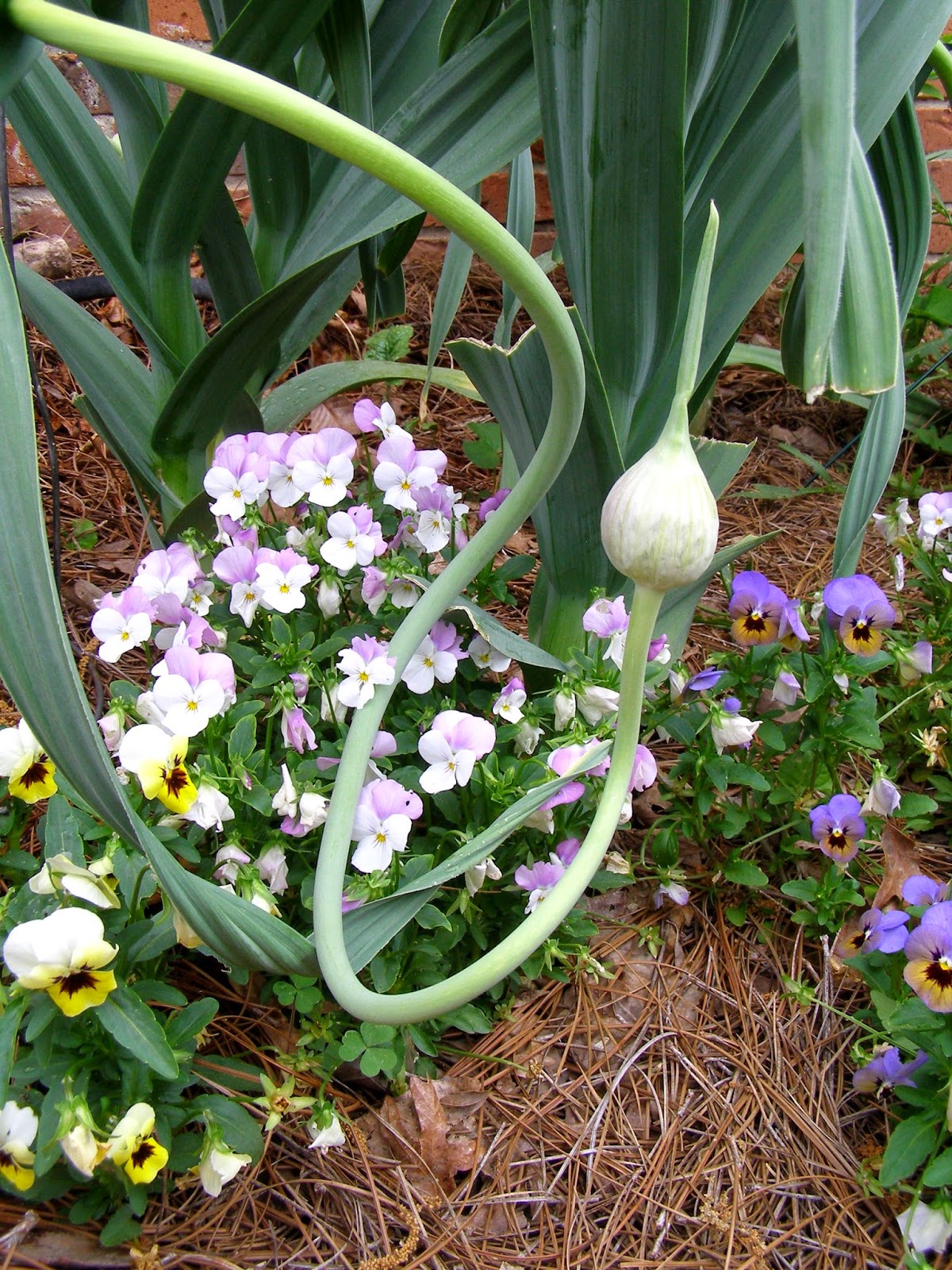
Garlic Scape
Scape
Garlic is a beautiful addition to edible landscaping. The scapes (or long stalks that hold the flower) can curve around into wonderful shapes that are very pleasing to the eye. For hardneck garlic, there seems to be a difference of opinion about whether you should harvest the scapes, or keep them...so I am trying both. All of the garlic plant is edible!! The leaves have a mild garlic flavor, and I add them to pesto. The scapes are also delicious in pesto, but can be grilled/steamed like asparagus! ....or you can leave them to harvest flower seeds.

Corn - Three Sisters
My baby corn is sprouting for my Three Sisters garden!! Wanting space to plant the Three Sisters was the whole inspiration for the sheet mulch project, and it's wonderful to see the life springing from the soil. Traditionally, one plants the corn in little hills 3-4 days before the full moon. While planting, offer prayers of thanks for the elements that make the plants grow (yes, I did this).

When the corn is 4-6 inches tall, I plant the beans, then when that sprouts, I plant the pumpkins. The beans are supported by the corn stalks and replenish the soil (corn is a heavy feeder). The pumpkins shade both, crowd out weeds, and discourage predators. The three also complement each other nutritionally.

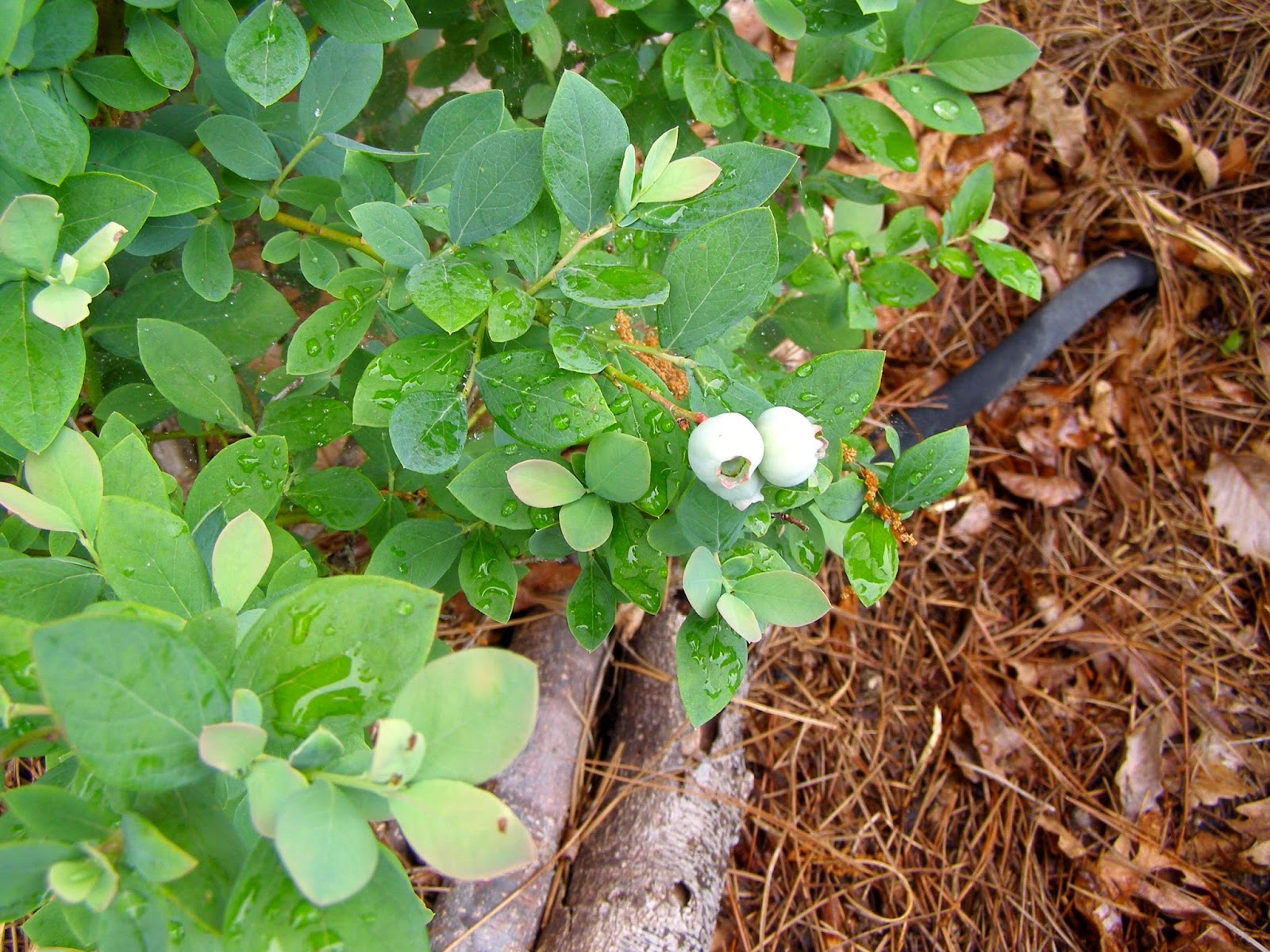
Blueberry
Blueberry
Blueberries are not yet blue, but I am looking forward to eating them. Even when they turn blue, we don't "pick" them -- if you touch them and they don't drop in your hand, they're not quite at their perfect sweetness.

Hyssop
Hyssop
In the Bible, it says "purify me with hyssop, and I shall be clean" but I use my hyssop to attract pollinators, and for cut flowers. It's an excellent companion plant in the garden, and has an attractive "small shrub" shape. I do plan to try some in tea, as WebMD notes it can be helpful for everything from menstrual cramps to cough/cold.

Fig
Fig
The fig lives!! Thank goodness! This fig was propagated by my father, from the large fig tree that grew outside my bedroom window when I was a child. I was working to espalier it against the brick, but the long, cold winter caused it to die back to the ground. The current plan is to "roll with it" and use the dead branch as a trellis of sorts to train the new, flexible branches.

I know that some years it might start where it left off, and some years it might begin anew, and I am okay with that. Plus, then I can string Christmas lights on the branches either way!


Monday, January 20, 2014

January seedlings


Hope springs eternal, and every planted seed is a grain of hope for a new year, a new life. This January, I started seeds for the new year. Little lettuces and herbs offer wonderful cheer, brightening a wintry day with their fresh, green shoots. I can sow them in the garden in another month, along with seeds of the same (or different), to fully exploit the wonderful, long growing season here in the mid-South.

In the past, I've made seed pots out of old cardboard rolls, but this year, I found a little wooden pot maker (like this one) to use with newspaper, and strongly prefer the resulting pots. They are sturdier and I think the newspaper will disintegrate better when they're planted in the garden.

Some of these seeds came from my favorite Bunte Forellenschluss, with the life inside waiting, like a djinn in a bottle, for the magic of light and water. In the Talmud, there is a line that says "every blade of grass has an angel that stands over it and whispers 'grow,' 'grow.'" I like to think of all the angels invited into my home, thanks to the sacred magic in those seeds.

Thursday, December 5, 2013

Sugar Cereal

Sugar cereal and Saturday morning cartoons
I joked recently on Facebook about how Southerners run to the store for milk and bread if snow is forecast, and a friend joked back "You buy groceries? I thought you guys were self-sustaining." 

It got me to thinking about how often living a simpler, more sustainable life can seem daunting in our media-saturated, consumer culture. For me, it's all about making very small changes. I'm not an all-or-nothing person. And, for the record, I have no desire to be self-sustaining, though "community-sustaining" is certainly a goal.

We talk as a family about our goals, and then find ourselves buying more organic, more local. Food is sacred. It literally creates us anew. Some Buddhist practices teach that how food is grown and prepared impacts not just the body, but the soul as well. Food prepared with a bad attitude causes a kind of metaphysical/spiritual damage, just like eating food full of hormones and pesticides can cause physical harm. 

So yes, the goal is to prepare healthy food with love...but it's also important to be honest and objective about where we are now. It's rather like filling a Facebook feed with a bevvy of gardening posts; it can mistakenly give people the impression that one is feeding a family of four from a flowerbed garden. (For the record, probably 10% of our food comes from our own garden + my dad's garden, though hopefully more as time goes on.)

Similarly, when shopping with my children recently, my 7-year-old son asked, "so mommy, is sugar cereal so bad we really should never eat it?" That gave me pause. In the pause, my son pointed out, "Well, we used to eat it once a year, on vacation, but we didn't do that this year. Is once a year okay?"


Pretty sure those honeycrisp apples in the background are not organic either.

"Yes, once a year is certainly fine," I said. "......so let's get the little boxes so we can try a lot of different things." This suggestion was well received, and then gave us the opportunity to read labels, to look at packaging claims (like "Good source of VITAMIN D"), to consider degrees of processing for different foods, and to discuss what choices mean for our bodies and the greater world to which we are connected. I love buying the little boxes, which you can cut open and use as a "bowl" of sorts. I always wanted to try even one of these as a kid, but it was completely verboten, and I coveted those little boxes.

In our world, as it exists today, we cannot avoid chemical pesticides and fertilizers. Even if I only consumed what I grow here myself (assuming I could grow enough), I would get some runoff from my uphill neighbor, or from the bird that eats it elsewhere and poops in my garden, or my wheat is cross-pollinated with GMO wheat, etc. There is no perfect, chemical-free, food-world....but this doesn't mean that my choices don't make a difference!!

Nowadays, I buy only organic strawberries and spinach. I buy organic bananas, unless they just look horrible (only usually about 10 cents/lb more than alternative). I buy organic apples about 80% of the time. (I have tried to begin with foods containing the most pesticides and petrochemicals, and/or the cheaper organic alternatives, and work from there.) And nowadays I buy sugar cereal once a year. We don't have to be all-or-nothing. The journey toward sustainability and moderation, for me, is made up of many, many small steps. 

Walk with me, hold my hand, and we won't run this race in vain!

I also have to share that my kids self-rationed these little boxes to last for several weeks, saving the last two for the Saturday morning after Thanksgiving. They didn't gorge, like I did on sugar cereal when I got to college. I found this to be very interesting, and pretty cool. For them, it's a "sometimes food," just for fun...a tiny bit of Yin that must exist in the Yang.


Wednesday, July 11, 2012

Give your veggies some company!

Company? for vegetables? As in "invite friends over for cocktails and talk to the tomatoes?" No, I'm talking about introducing Companion Plants to your garden, which will attract beneficial insects and deter garden pests.
Borage is beautiful and edible.
I've always planted basil and marigolds around my tomatoes. I've also always had parsley, sometimes cilantro, oregano, thyme and rosemary in the garden. But this year I picked up some borage and nasturtiums at a local herb fair. Both are gorgeous! The borage is large and covered with pollinators. The flowers are lovely and the tiny hairs on the plant sparkle in the sun. Nasturtiums grow up around the base of tomatoes and wind up the trellis with cucumbers. I have also learned that their flat leaves will attract both slugs and cabbage worms, so next time I'll plant them around my cabbages.

Look closely for the tiny caterpillars, aka hungry cabbage worms that decimate all types of brassica.
I planted cabbages fairly early and they were attacked again and again by several varieties of cabbage worms. Within a week of adding the companion plants to the garden bed, I noticed a distinct uptick in the the number of insects in the garden and was fascinated to observe a wasp attacking and eating the cabbage worms! 
Wasp eating cabbage worm.
 Besides being good for the garden, companion plants add beauty in the form of foliage and flowers. My "garden" is largely in my front flowerbed this year, and will always be in the front/side yard since that is where the sun lands. I love "edible landscaping" or "kitchen garden" approach -- functional can also be quite beautiful, and companion plants offer a cost-effective, beautiful and organic approach to building a healthy garden.
Bee pollinating cucumber.

Companion plants can also be other vegetables! Onions mix well with strawberries...chives will improve the flavor of carrots...this is important knowledge that we must not loose! I also intend to learn to use some of the medicinal herbs beyond "just" for cooking.

Wednesday, October 19, 2011

Stocking Up

So you're feeling all thrifty and culinarily advanced, making homemade stock in your kitchen. Maybe you're even kickin' it super-frugal old-school like your gramma and saving your veggie bits in a stock bag. Homemade stock is really easy, tastes incredible (especially compared to the high-sodium stuff from the store), makes your house smell great, and saves money. But you still need to be able to store it.

Stock "brick" sits easily, is compact, and easy to defrost in a bowl.
Like most people, I freeze my stock. I used to take the "flat bag" approach, but in my freezer approximately 10% of bags get mysteriously punctured. The only way to know which is to defrost and see if they leak! It took about a dozen episodes of losing half a bag of my lovely stock in the sink or microwave or fridge to decide to always use a container "just in case." Well, there's no easy way to put a flat bag in a bowl to catch any leakage! Now, if you have the perfectly organized freezer where you never toss items around and you also know you never, ever overfill your bags, then flat bags may work for you. Ditto for glassware. I prefer "stock bricks" myself.

Shown here just out of the freezer.
Filling 8-10 bags and fitting them into a 9X13 pan is easier (in my experience) than trying to freeze them flat. I can fit 8 bags with 3 cups each into a 9X13 and the other 2-4 in a saver of some sort. I do my best to make sure fluid is distributed evenly so they don't stick together (see photo above). I pull them out of the freezer after a day or so, separate them and store them back in the freezer. If any are stubborn, I let them sit on the counter for 5 minutes or so.  You could run them under cool running water for a minute to separate, then stick them back in the freezer.

I used to freeze in smaller quantities, but I use more stock nowadays because it's a really wonderful way to add flavor. When I defrost, any extra goes into a mason jar in the fridge for use that week.

I am still using the plastic baggies. I would love a re-usable (or at least recyclable) alternative for freezing stock, so if you have a better option, please let me know. For now though, even with the baggies, my taste buds, my health, my budget and my planet come out ahead with homemade stock. Try some today!

Saturday, August 20, 2011

Hornworm!

I found several of these hornworms on my tomato plants last week. They can be hard to spot so I don't look for them, but instead what is missing...in this case, the leaves at the end of the stem. In the last two years I was not vigilant (to my chagrin) because they are voracious eaters and can defoliate an entire plant in a day or so. You can also look for dark pellets on the leaves; these are their droppings.

They seem to appear just when my tomato plants are full of green fruit and then they eat everything. This year, I've been on the lookout and given the plants a daily visual inspection. Thus far, this easy approach has been effective! I just cut off the bit of plant they are eating and dispose of both. While I will happily smash squash bugs (with gloves), I am a bit too squeamish to just squish a hornworm.

I believe this is actually a tobacco hornworm, based on some brief googling this morning. This site has some wonderful information about the life cycle of this interesting garden pest. If I ever see one with wasp eggs, I'll be sure to get a picture.

Tuesday, August 9, 2011

Icebox Pickles: No heat required!

Icebox Pickles
No cooking required.
My last summer before college, I dated a fellow whose mother always had a bowl of what she called  "icebox pickles" in her refrigerator. She explained to me that it was perfect for summer because it required no heat, just mix and leave overnight in the fridge. Icebox Pickles take full advantage of a cucumber's natural crispiness and, as they're stored in the "icebox" (aka: the fridge), they're cool and refreshing in the heat of summer.

I'd never tasted anything like them before. I found my fork actually seeking out onions for the first time in my life; they were super-thin, just this side of raw, with a pickly-sweet crunch that perfectly complemented the cucumber.

This is a double batch, sliced super-thin with a mandolin, to give an idea of how much veg you need.
"Six medium cucumbers" is so very subjective!
A few years ago, I began trying to reproduce these unique pickles (with two unsuccessful attempts), when I found a recipe for "Marinated Pickles" on the recipe blog for my CSA, and suddenly I was in heaven. The recipe required no cooking, no heat -- cool and crunchy, all the way, so I adapted it to suit what I keep in my pantry/garden. Slice veggies thinly, toss it all together in a jar or bowl, and leave it in the fridge overnight. Easy, Fresh, Crisp. Summer!

Marinade (because it's technically not a brine if you don't boil it), before vigorous shaking.

The recipe is below, and calls for cucumbers and onions, but as you can see I added some green pepper and super-thin carrot. Use what you have.....

UPDATE, Summer 2018: After several years of experimentation, I have significantly reduced the amount of sugar from 1/4 cup to 1-1.5 TBSP. I kept cutting it and not finding a difference in flavor...until I went below 1 TBSP this year. Try this for yourself! See where your palate notices the change.

Click here for printable recipe.

Saturday, June 18, 2011

This Tennessee gal loves her Volunteers (plants that is...)

Go Big Orange! Scarlet Nantes - beautiful and delicious
Lettuces: Bunte Forellenschluss (my favorite), Winter Density and Grandpa Admire's.
I love peas in the pod.
Sunflower and the bean stalk, inspired by The Three Sisters.
Now how will I ever pick the beans?

Again, I have squash in the flowerbeds. (Did you know that was my inaugural post on this blog?) All of these are volunteer though; they just came up on their own. Beautiful, isn't it? That large broccoli plant is gone now, replaced with marigolds, moss roses and sweet alyssum (also volunteer). I'm amazed at what comes back each year and also at how perfectly one crop fades into the next. As the squashes sputter out in a few months, the moss roses and alyssum will explode into mounds of color that last into fall. I can pick up other flowers here and there on sale to fill in any bare spots. 

I say these are "squash," because that's what I planted in that area last year, but this one is looking much more melon-like to me. With volunteers, you are thankful for whatever you get because it's more than you expected. Not unlike my alma mater's football team, now that I think of it....

Thursday, April 21, 2011

Sustainable Reading

When Bel at Green out Every Window invited me to participate in the Earth Day Reading Project, I loved the idea immediately. Share three books that have most inspired you to choose to live more sustainably. Fiction, nonfiction, graphic novel....it's all about what has made motivated you to turn ideas into actions. Full rules and a great list of gardening blogs can be found here at The Sage Butterfly.


Animal, Vegetable, Miracle: A Year of Food Life (P.S.)


Animal, Vegetable, Miracle by Barbara Kingsolver inspired me to action almost immediately.  We had begun to garden and had a compost bin. We were buying less "processed crap" with all the coloring, additives and packaging, but weren't quite sure what else we really could do. After all, we live in the suburbs...it's not like we can feed ourselves from this tiny bit of earth, right? Within a year of reading this book, I realized the power that comes from reconnecting with our food sources. I love Kingsolver's fiction, but her sharing of her family's commitment to eat only locally for an entire year (no bananas!) changed how I think about food.


Kitchen Garden Planner (Country Home)

I picked up a copy of the Kitchen Garden Planner at a bookstore's going out of business sale. We lived down in Florida and had asked (and received) permission to plant a small garden plot in the back yard of our rental. I dreamed of what I might do with a home and yard and garden of my own. As it turns out, I plant squash in the flowerbeds. All of my planted space is a kitchen garden, each year more beautiful and each year more edible.


Gnomes

I know, I know. Insert joke about garden gnomes here. But the interior of this book is filled with amazing illustrations detailing the many ways sentient being  might live in harmony with nature, might balance needs of self with needs of the system of which we are all part. When I was a child, I discovered this book next to a rocking chair in my grandmother's guest room. She had placed it there purposely so a little girl weary of grownup conversation might find some magic with which to amuse herself. Whenever I harvest herbs, I think of the gnomes in this book. If I ever make my own dandelion root tea (not unlikely, these days), I will credit this book for the inspiration. 

So that's three. I considered including Bill McKibben's Eaarth, for its influence on my planning and thinking, but there is no action yet I can directly attribute to reading the book. Square Foot Gardening was also a strong contender for the Top Three, because he makes it easy to get started with gardening no matter where you live. I appreciate that he thinks growing things should be mostly fun.

Monday, January 17, 2011

A half-gallon of yogurt is too much!

Peach yogurt made with plain yogurt and Amish preserves.
About a year ago, I happened upon a few intrepid bloggers who had successfully made yogurt at home...in the crock pot.  This idea appealed to me immediately because it meant I did not have to buy a specialized appliance. So, I tried it and it really worked!  The only problem is that a half-gallon of milk makes a half-gallon of yogurt, which is an awful lot to eat in 7-10 days.

Even though I strain half of it to make "yogurt cheese" (can be used as a sour cream substitute), I was still tossing a lot of it.  I'm all for making all-natural, preservative-free, HFCS-free food, but it pains me to throw away food.  It feels actively ungrateful.  So, since I loved the homemade yogurt, I had to make about half as much.

Finally, I bit the bullet and purchased a small, 1.5-quart crock pot to make a smaller batch.  Yes, I realize that I went out and bought an appliance *just* to make yogurt, but at least it can be used for other things.  Incidentally, while reading the reviews, I realized I could also use this to make oatmeal/hot cereals overnight, so if anyone has a wonderful oatmeal/quinoa breakfast, please let me know. 

With the smaller crock, I had to tweak the timing slightly because it heats differently, but basically the milk needs to heat up to 180 (without boiling) and then down to about 112. You can either use a freeze-dried starter or some yogurt with active cultures, either from a batch you've already made or just some Dannon or Stonyfield organic -- as long as it says "with active, live cultures" it will work.  I have used both, but keep some Yogourmet on hand in case we've eaten up all the yogurt.  There will be no further mention of yogurt being allowed to spoil!

Yogurt is easy.  Pour one quart of milk (that's four cups) into the small crock.  One of these days I'm going to start using liters and grams and see if anyone notices.  Turn it on Low for 3 hours, then unplug and turn off for 2 hours.  Remove about a half-cup of milk to mix with your starter.  The Yogourmet is premeasured for one quart.  If using yogurt, use about 1/4 cup.  Whisk those together well, then add back into the crock and whisk well.  Cover and let sit at least 4-5 hours, or overnight.  I did cover the crock with a towel, but I'm not sure it's necessary; I won't use it in the summer.  After it's thickened, refrigerate until cold, then pour off any whey.  If you like, you can further strain with a cheesecloth-lined sieve for a thicker yogurt.  You can also add some powdered milk when you add the starter for a thicker end product.  Experiment!


Line a mesh strainer with cheesecloth, add yogurt and fold remaining cloth gently over the top.  Let sit in fridge for a few hours or overnight and enjoy a thick, Greek-style yogurt that is hard to differentiate from sour cream.
I like to make this in the morning so I can put it into the fridge before bed.  If you're out of the house all day, you can certainly start it when you get home and add the starter before heading to bed...just remember to pop it into the fridge before you leave the next day.

I prefer low-sugar preserves to flavor/sweeten.  Trader Joe's has a great selection and Costco also offers an organic strawberry preserves with only 8g of sugar per tablespoon.  Vanilla is also a popular option.  If it's not sweet enough, I find that agave nectar mixes very easily with the yogurt.  Honey tends to solidify and sugar remains grainy.  

I haven't gone so far as to break down the "cost per portion," because Stephanie already did it! Making organic yogurt was $.02 per portion vs. $.27 per portion for YoBaby....that means YoBaby is almost 15 times more expensive than homemade and you can make it lactose, casein, dairy, soy, gluten, and any other allergen free.

Tag Cloud

Make Your Own simplify Easy garden Inside My Fridge Living on Less recipes food frugal Live Well meal plan Tennessee Edible Landscaping Kitchen Garden organic Garden Tour Spring flowers Real American Food Use It All change vegetables Dinner Grow Your Own grow tomatoes Life Love Summer greens kids Family dinner recipes explore gift seeds Companion Plants Lettuce Reality Sink Saving Seeds bread freezer garlic squash Fall Inspiration Special Try It and See emotion moderation planting quick reduce Art Artisan Bread Beauty CSA Celebrations Cool Beverages Cucumber Experiment Featured Flood Sheet Mulch Small Changes Tea craft fruit reuse soup stock waste yogurt "sometimes food" Amaryllis Becky's Favorite Things Bloody Mary Blueberries Books Cabbage Chard Connections Date Night Edible Flowers Family Dinner Jacob's Ladder Lint No-till Organize Read Real Life TN Native Plant Trash Day Use the Oven Winter black-eyed susan chicken crock pot daily reminder essential oil garden pests kale leftovers permaculture plastic pork potatoes recycle rudbeckia seedling stir-fry strawberries swale trash vegetarian volunteer A-frame Authentic Authentic2 Bacon Baking Fail Better Homemade Body Balm Breakfast Build Soil Butter Carrots Chives Chocolate Milk Chocolate Syrup Christmas Clean Cookbook Review Crock Pot Bread Eat Local Faith Fire Cider Food as Medicine GM foods GMO Ginger HFCS Health Holy Honeysuckle Hot Cocoa Household cleaner Hydrangea Icebox Pickles Iced Mocha Immune Booster Iris Kitchen Sink Lent Life Notes Monsanto Morning Sink My Neighbor's Garden Pickles Placating with Plating PlantEaters Propagating Geraniums Sacred Salvia Leucantha School Lunch Sewing Slow Cooker Bread Slow Cooker Fail Spiderwort Spinach Spiritual Practice Spring roll Sprouts Thanksgiving Time-saving Tips Tincture Turkey Turmeric Victory Garden Vodka Water Kefir What Chefs Feed Their Kids basil bento berm birthday borage brassica broccoli cabbage worm cake canned tomatoes chili coconut compost dessert discipline eggplant eggplant parmesan fennel flour food waste frosting gluten green beans greenhouse grocery healthy hair healthy scalp hornworm hugelkultur icing knead kneading kohlrabi landfill lasagna garden nasturtium natural hair wash no poo pancakes parsley patience pests pizza plantain potager processed sangria seed pot smoothie standing desk substitute for dill tarragon teacher appreciation teacher gift vegan water window crayons yeast

Eat Locally!