Showing posts with label Easy. Show all posts

Friday, August 7, 2015

Healthy Hair & Scalp

healthy natural hair & scalp
No hair product here!
Way back in 2008 after my daughter was born, I was dismayed to see my hair gradually losing all of its body. It's pretty fine, and I'd always used a good bit of product to give it curl/body, but nothing seemed to be working. Around that time, I started hearing from people who ditched shampoo for baking soda/apple cider vinegar and found that they had better results with less/no hair products. 

I was getting desperate, with my hair getting flatter and limper by the day, so I decided to try it. I found that I loved this new method, and it was better for the environment to boot! It's EASY: take about 1 TBSP of baking soda and dissolve it in a cup of water to wash your hair, rinse well, then follow with a rinse of 1 TBSP apple cider vinegar to a cup of water (and rinse well again). Hair is naturally mildly acidic, so the vinegar rinse restores pH and smooths the hair follicle.

The only downside I found was that my scalp would occasionally get dry/itchy. I'd do a coconut oil scalp treatment (also good for ends), and that worked really well for almost six years....until I decided to let my hair grow longer. Suddenly, my hair seemed dry, and my scalp turned flaky, itchy and generally unhappy, so I headed back to the internet and found other people with the same issues.

After so many years, there was no way I was going back to commercial shampoo, so I tried several alternative recipes, and found a wonderful hair care regimen based on the aloe/glycerine recipe here.  Aloe and glycerine are both moisturizing, and left my hair looking/feeling a little greasy, but combining that with the baking soda was perfect. I haven't tested the pH or anything, but my hair looks/feels amazing! 

Old spice bottles with a shaker top open easily in the shower!
Above you can see what I have in my shower: 1 sport bottle for mixing, one bottle of apple cider vinegar, one bottle baking soda, one bottle of Aloe/glycerine hair wash (all re-used, of course!).

Healthy Hair/Scalp Wash

1 part pure aloe gel
1 part vegetable glycerine
2 parts filtered water
Essential oils -- I use tea tree, rosemary and lavender

Combine ingredients well. Add 1-2 tsp to 1 cup water + 1 TBSP baking soda or 1 TBSP Castille soap (I find I typically prefer the soap, though I will sometimes use baking soda for a second wash) , and apply to hair. Rinse, and repeat if necessary. Follow with an apple cider vinegar rinse if you like (rinse again with plain water to finish).

One note about this recipe: the "pure aloe gel" is NOT the green stuff in the bottle, it's actually what is inside the aloe plant. I can buy large leaves of aloe at my grocery store, but I prefer purchasing a bottle (needs to be refrigerated after opening).

I really dislike defining anything by what it isn't, and I think "no poo" sounds horrid, but I'd be doing you a disservice if I didn't mention it if you want to google for other testimonials. There are also some really great-looking recipes here, including another version of the aloe/glycerine recipe that I might try this winter.

Save money, reduce waste (re-use bottles instead of buying more), put fewer chemicals you can't pronounce on your skin....make your own healthy hair wash today! 


Sunday, July 13, 2014

Season's First Eggplant = Eggplant Parmesan with Roasted Tomato Sauce


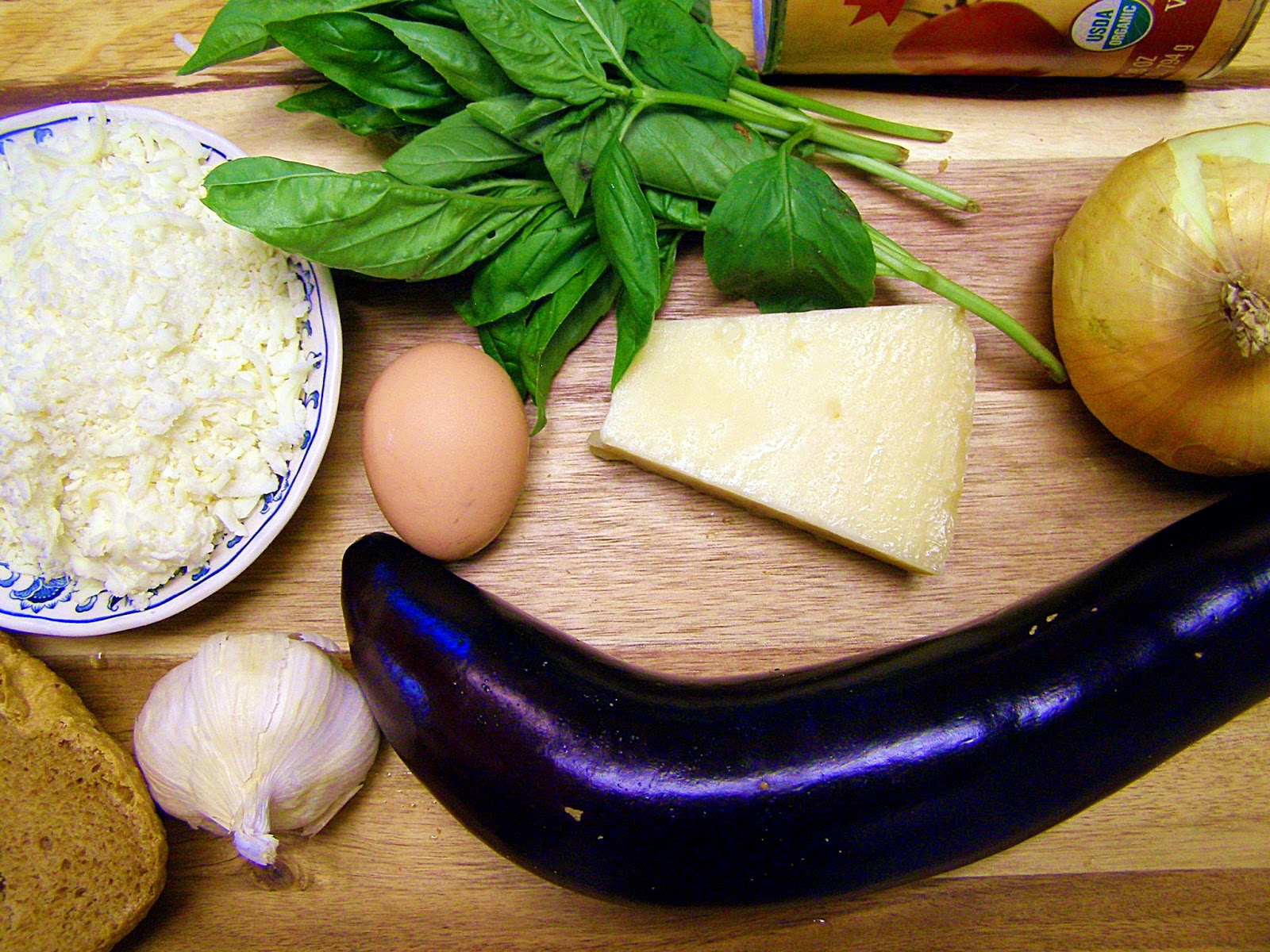
Eggplant Parmesan
We returned from vacation to find our first beautiful eggplant. Usually, I like to make Eggplant Parmesan with a fresh tomato sauce, but all the growing tomatoes are green and I've used up last summer's frozen tomatoes. But my pantry always has a jar or can of organic whole tomatoes, and I have plenty of fresh basil, so dinner is on. 

Roasting canned tomatoes is a great way to bring out their flavor, so that's my plan for the sauce. You can use a jarred sauce for this if you want (and I use plenty of that for pizza and such), but your eggplant will thank you if the sauce is fresh....and it's really easy.


First, preheat your oven to 350F. Then, find a pan in which the tomatoes will fit snugly, but not be on top of each other. A 9" square/round pan is usually great, and most people have these in the kitchen. Add a touch of olive oil, chop an onion, add a dash of red pepper flakes, and pop it in the oven for 10 minutes or so. You want the onion to soften, but not brown.

Canned tomatoes
While the onion is roasting, drain (and save!) the juice from your can of tomatoes. We'll add this back in later, but we want the tomatoes to roast, not stew. I actually had a half tomato from the garden so I chopped that into large chunks. Grab a few cloves of garlic and peel them. If they're large, split them down the middle. You can also see some shallot I found that needed to be used.


Roast tomatoes
When the onions start to soften (as you can see, mine were not quite translucent yet), add in the drained tomatoes, garlic, shallot. I added a splash of olive oil, salt, and pepper and stirred it up. Now it goes into the oven for 30-40 minutes to slow-roast.

Fresh Eggplant
While that's roasting, it's time to work on the eggplant, which needs to be sliced thinly (maybe 1/4" slices). You can see two tins: one has some seasoned breadcrumbs, and the other has a beaten egg with a little water added to stretch it. Dip the eggplant slices in egg wash, then in the bread crumbs, and put them on a cookie sheet. Roast them at 350F for 5 minutes, then flip and roast for another 5 minutes.

I found this no-fry technique for eggplant here a few years ago, and I strongly prefer it to frying the eggplant in a skillet. It stays crisper, is healthier, and I don't have to have both the stove and oven going in a Tennessee July. I don't make eggplant parm in the winter....eggplant is a SUMMER vegetable and the flavor is far superior when it's fresh. 

Also, when I pick eggplant fresh, I almost never find that it's bitter, or that the skin is tough, and I never have to salt it ahead of time. Word to the wise: TASTE a piece of the raw eggplant to be sure! In fact, taste everything as you go. You'll learn a lot about how flavors develop.

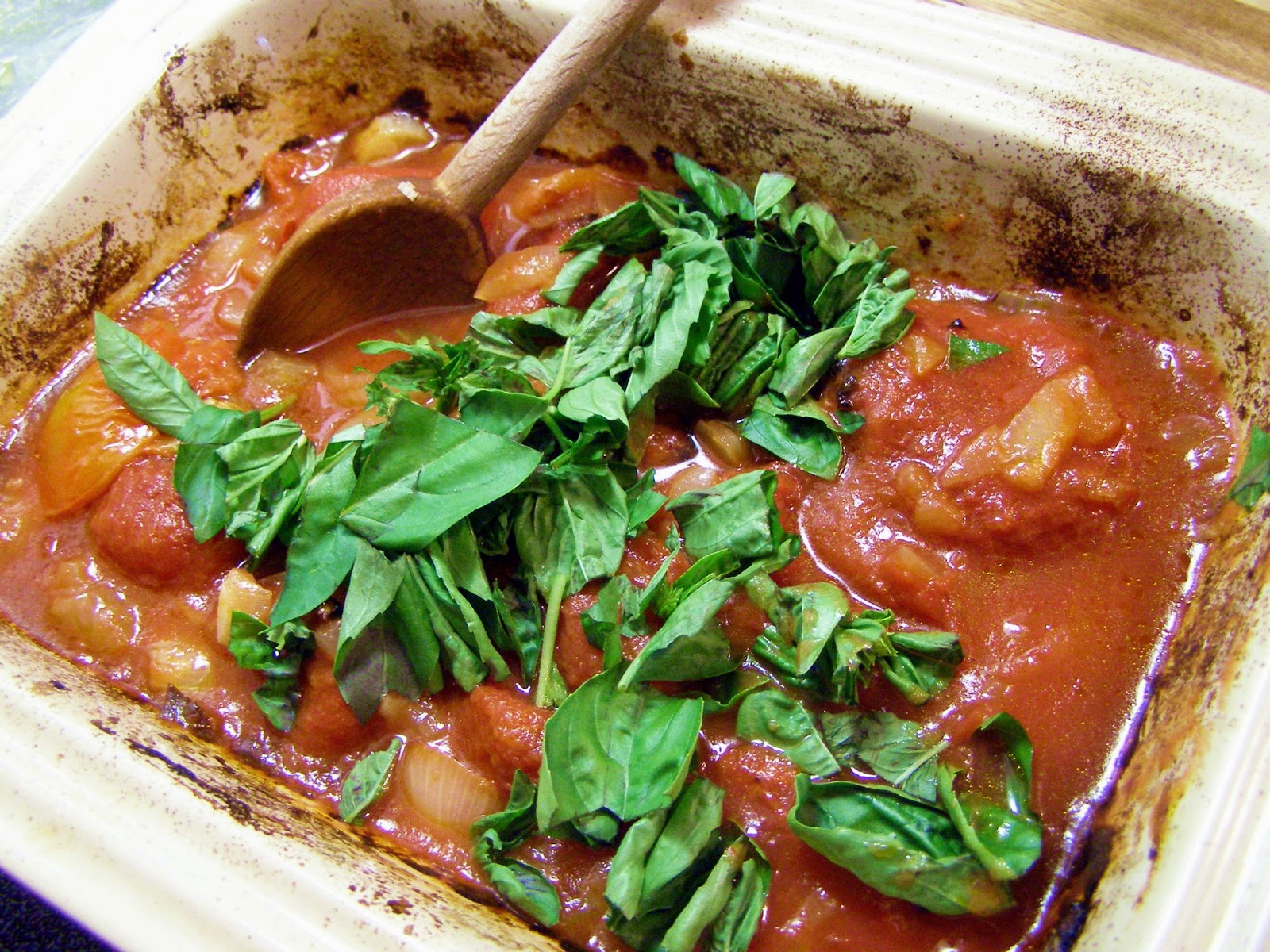
Roasted tomatoes
Above, you can see the tomatoes after about 35 minutes in the oven. They smell divine.


Next, roughly tear the basil leaves, and mix them + the reserved tomato juice all in with the roasted tomatoes. This is then set aside to cool a little while we finish roasting the eggplant slices. (Taste it.)


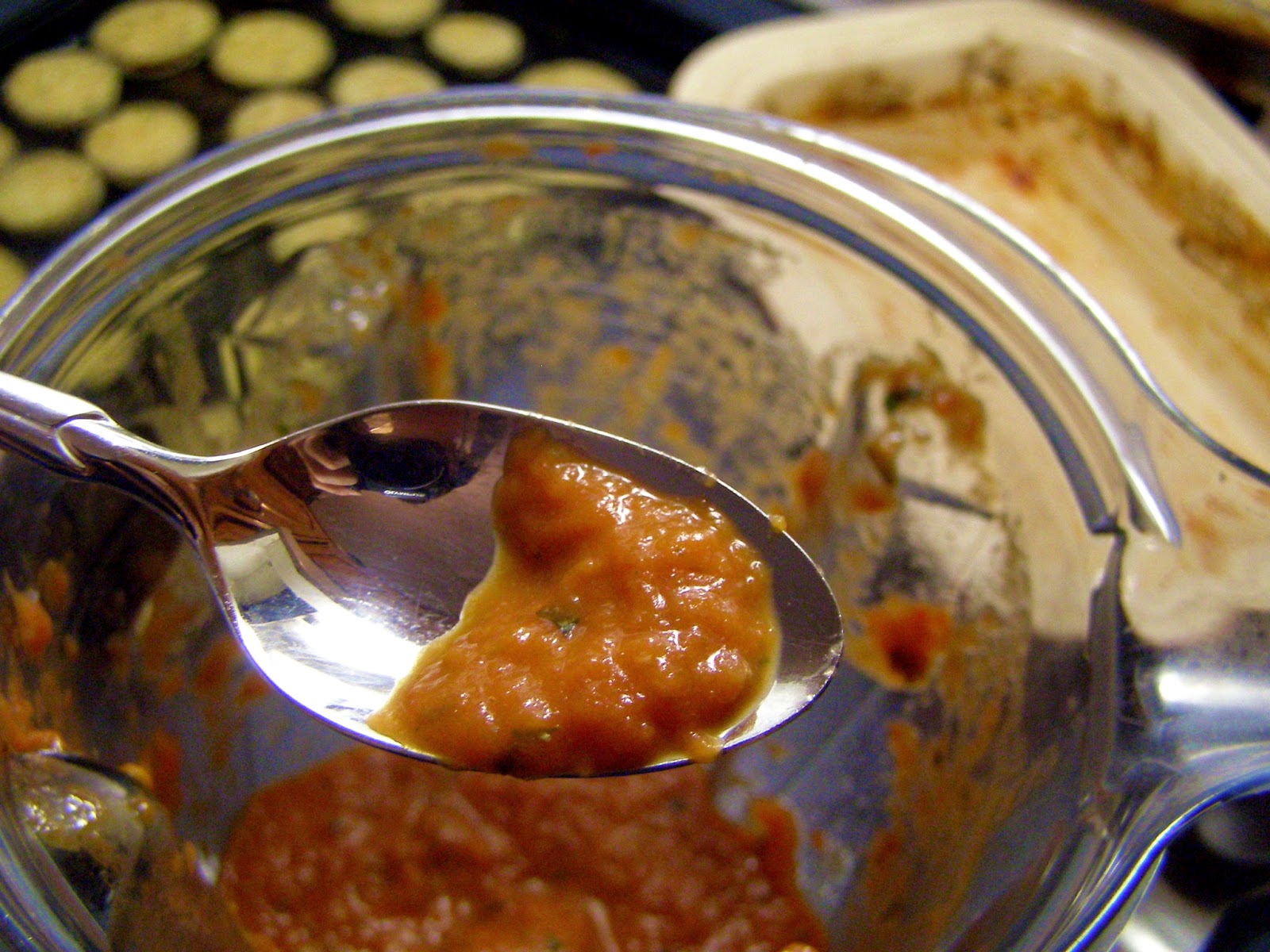
Quick tomato sauce
Once the sauce cools a little, dump it all into the blender and let 'er rip. Then, (of course) taste the sauce and see if it needs salt or pepper. This is also basically how I make my fresh tomato sauce (minus the roasting of the tomato). With roasted or fresh tomatoes, it is unlikely you will need any sugar. Sauce made this way will look a little pinker than jarred sauce, and it should taste really fresh.

Now, at this point, you can (1) set everything aside and assemble the dish shortly before you eat, (2) assemble the dish and store it in the fridge to bake later, or (3) assemble and bake now. If you put it in the fridge, I recommend putting it in a cold oven so it can warm as the oven preheats.


Eggplant parmesan
Assembly: put some tomato sauce in the bottom of your dish. Layer in the eggplant slices. Top with grated mozzarella and grated parmesan. Then start over, until your dish is full.

Eggplant parmesan
Here's the dish, ready for the oven. Bake at 350F for 30-45 minutes until browned and bubbly. (So, check it at 30 and see how it looks, but know that it won't need more than 45 to cook thoroughly.)

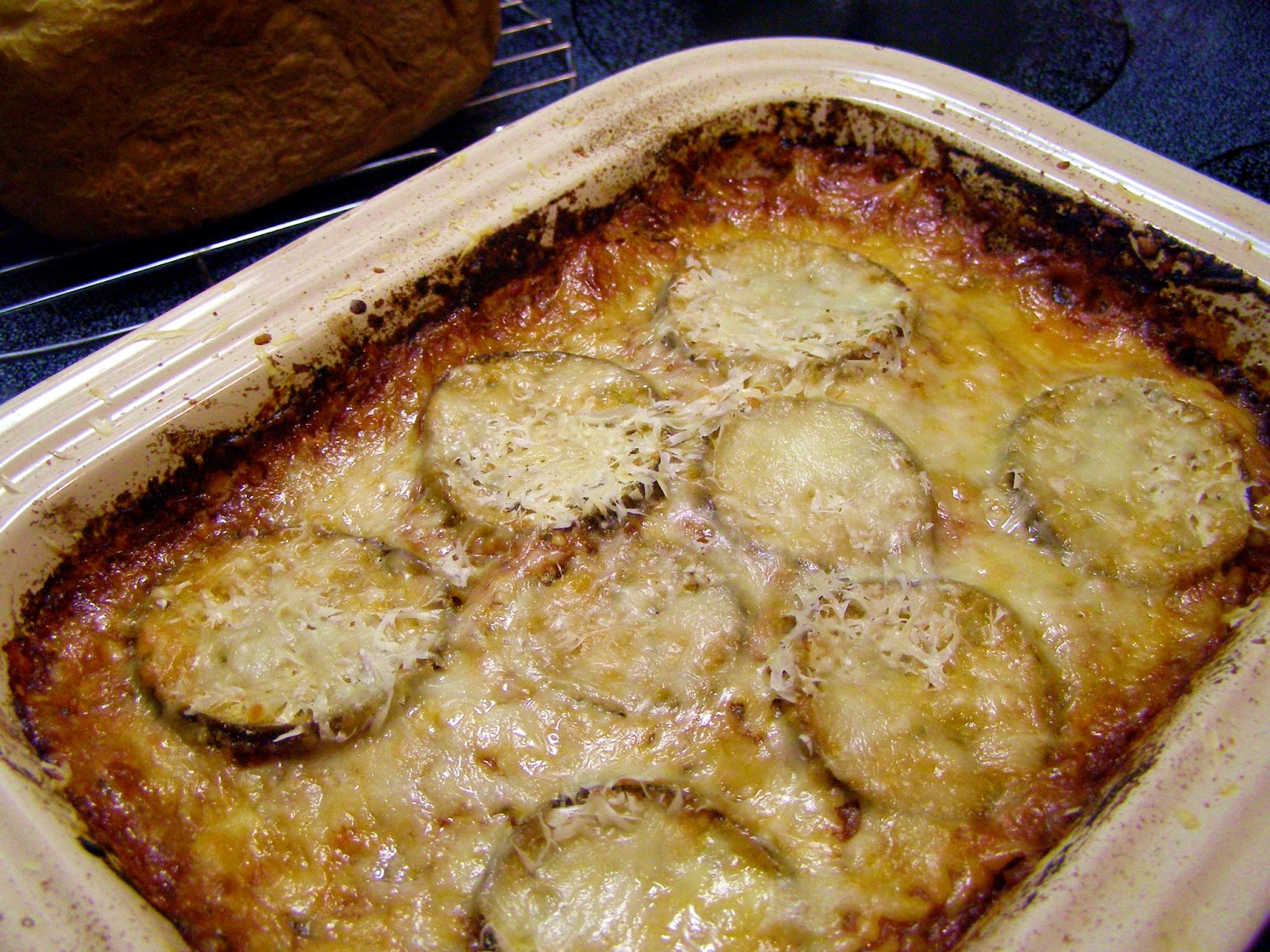
Eggplant parmesant
Here's the finished dish, ready for dinner! I've set up a "glory shot" here, with the homemade bread in the background. Three out of four family members rated this dish a "10," and we picked up some more eggplant at the local Farmer's Market to enjoy the bounty of the season!

Buy seasonally. Cook simply. Eat well!


Friday, May 2, 2014

Easiest way to build a great garden: Sheet-mulching


Easy. Do it easy. I believe this so strongly, that I even have an "Easy" tag for posts here South of Sunnybrook. And "sheet mulching" is the easiest way I've ever seen to build a garden. 

While I'm still all about adding veggies into my front flowerbeds, now that the blueberry "shrubberies" are getting larger, I can't plant tomatoes there any more. Plus, I wanted to try a Three Sisters Garden....and our full-sun real estate is our front yard, but the idea of tilling up my hillside seemed both daunting and unwise.
Summer 2013: No room for tomatoes here!.
Luckily, in May 2012, I learned about a technique called sheet-mulching. Basically, you make a big pile of organic matter on top of cardboard and let it sit for six months before planting. How easy is that? I decided to give it a go.

Building Soil

I started with several inches of manure in my bed. I am very lucky to have an aunt with horses. She is lucky to have a niece to help her cart it away! Generally, the sheet mulch begins with cardboard, but I didn't have any yet. It really doesn't matter, as long as the weed barrier is near the bottom -- it's all going to end up as topsoil anyway. A nice feature of this method is that you can make your beds any shape you like. As you can see from the picture below, I have a curve in my garden to accommodate the shade of the magnolia tree.


Wet each layer down well to get things mixing and breaking down. This does need to stay moist for optimum soil development, so I did water it occasionally during the hot Tennessee summer.
So easy, a child can do it.
Here you can see my first layers: manure, cardboard, straw...then compost, lawn trimmings, and other organic material on top of that.


I decided to use my remaining straw bales to act as a barrier to keep all my good stuff from slipping down the hillside. Two years later, I can tell you that was a good call. I am planning this year to grow a living fence just beneath the straw bale layer, using the abundance of forsythia I have on my property. I would love to know if anyone has done this before, or has other suggestions for which plant(s) to use.
I planted a cover crop in the late summer, and then last spring, I had a bed all ready to plant. I have a picture here of the bed in August of 2012

Getting into permaculture

Below, you can see the garden in May 2013. I decided to add a path near the tree. I also observed some erosion issues, so I built two hugelkultur berms, with swales to control water, where the two pink lines are. These have worked beautifully.

Below, you can see tomatillos, flowers, and purple basil growing near one of the hugelkultur berms. I also started an asparagus bed near the driveway. This method builds great soil, and it's so easy that I am slowly but surely planting my front yard this way! It's highly recommended here South of Sunnybrook.


Saturday, April 20, 2013

Still Life Goes Fast

I sometimes buy flowers to decorate my home, but more often I prefer to decorate with what is available. Pruned edges of plants become a dramatic arrangement, dried crape myrtle blossoms are miniature "winter tulips", fresh blooms and herbs brighten a kitchen window or table. Bring the outside in, keep it simple, find beauty in something that would otherwise be mundane.


 As I was walking around the house a few days ago, enjoying the warm breezes through all the open doors and windows, I realized that I usually have fruit placed throughout the house (more in the cool winter than summer), and I thought of all the wonderful Still Life art featuring a bounty of fruit and everyday objects, so I snapped a few pictures.

Consider yourself warned: these "still life" arrangements go fast if you have growing children around. So why relegate these wonderful colors to the refrigerator? I say enjoy the beauty, meditate on the impermanence of life, and then have a snack.

Monday, November 5, 2012

Easiest to make instead of buy: Homemade Stock

When Fall arrives, I start making chicken stock again. Homemade chicken stock tastes better and is far more nutritious than anything you can buy at the grocery store. And it's super easy to make. Really, I promise. Basically throw stuff in a pot and let it simmer....and enjoy the smells all day. Strain and freeze. 

Chicken, garlic, onion, celery, carrots, herbs, peppercorns....add salt later after tasting.
The biggest revelation for me was learning that I didn't need to peel things or chop them small. Just quarter that onion and throw it in (remove produce stickers and wash off any visible dirt, of course). Chop a head of garlic in half and add it. Throw in some carrot peels. This is going to simmer all day, and the peels will add a lovely color to the stock. If you plan ahead, you can have a Stock Bag all ready to go! Use of a Stock Bag is quite thrifty and can add a wonderful depth of flavor because of the vegetable variety. I should caution you not to add purple cabbage, though, unless you want Barney-colored broth as my neighbor Abby discovered, much to her chagrin.

Making homemade stock -- especially if you use a Stock Bag -- is a wonderful way to Use It All! Here in America, we throw away vast quantities of edible food, and our house is (sadly) no exception, though we've cut waste dramatically in the last few years. Small changes make a difference! So if you have a few mushrooms that need to be used, but don't fit tonight's menu...toss them in the stock bag. Don't wait till it goes off and chuck it in the compost: SAVE IT in the freezer until you can USE IT.

The addition of some giblets to this batch produced a very small amount of foam which is easily removed. 
So...I never use fresh chicken for stock (except for giblets when I have them). Instead, when I roast a chicken (or very occasionally cook bone-in breasts or other parts), I save the carcass/bones in a plastic bag in the freezer and use those to make the stock. Most of the nutrition in homemade stock comes from the bones. You can put them on a sheet and roast them first for a richer color/flavor for the stock, but I am all about easy, so I never do this and my stock never suffers from flavor deficiency. We did make stock with a fried turkey carcass once and it was delish!

Note: if you do use fresh chicken, you'll want to put it in a pot of cold water, bring it gently to a simmer, and scoop off the foam, or "scum", that forms on the top. This foam is not harmful, but it will make your stock cloudy. So remove, Then add veggies and continue to simmer. 

Here is the "recipe" I use:
1-2 chicken/turkey carcass(es), including giblets if available (excluding the liver)
Good glug of vinegar (to leach nutrients from the bones)
Bag of vegetable trimmings
Add quartered/halved fresh veggies if necessary -- I make sure to have roughly equal parts of onions, carrots and celery, and then I add some garlic
 -- other veggies that work well include mushrooms, leeks, fennel, tomatoes, any greens, broccoli, zucchini, squash...you get the idea
Add fresh herbs if you have them (parsley, thyme are my favorites)
Add a shake of peppercorns
Add a bay leaf or two

Start it cold and slowly bring it up to a gentle simmer. It won't hurt it it it boils, but the "low and slow" will give you clearer stock in the end. Simmer for several hours stirring/tasting regularly. If you like, you can let the bones sit in cold water/vinegar for a half hour or so to pull even more calcium, gelatin and other nutrients from the bones. Once it has been simmering for an hour or so, I start to taste and add salt sparingly as it cooks. I do not add salt at the beginning because there are generally trace amounts on the carcasses from when I cooked them the first time. I prefer a lower-sodium broth, since I can always add salt based on what I'm making with it. Taste as you go to learn how the flavor develops!

Here you can see the stock after simmering for about five hours. The broth is developing a lovely color and the vegetables are quite soft. By now, little bits of meat will also float off the chicken bones and the carcass will come apart when I lift it with the spoon. This photo was taken at 4:30, so this stock will cook another hour or two until dinnertime, but I could certainly stop here if I wished.

When you decide it is done, turn off the heat and let it cool. Strain it through a colander, and put it in the refrigerator. The next day, you'll see that any excess fat will congeal on the surface in the fridge, so you can just scoop it off the next day. Sometimes I've made stock that had a jello-like consistency when cooled -- this is very nutritious and great for soup when someone is sick!

The final step is to strain it through cheesecloth and portion it into containers for the freezer. Nowadays I use wide-mouth glass jars instead of ziplock or plastick (just don't tighten the lids).

You can make vegetable stock by leaving out the meat. Ask at your grocery or market for beef bones or fish bones to make other types of stock.

Besides delicious soup, use your stock instead of (or half and half with) water when making rice, use it to make risotto, pan sauces,  use in mashed potatoes with 2% milk instead of cream, cook veggies in stock, sub for wine in pasta sauce, it is liquid gold baby!!


Thursday, September 20, 2012

Life Notes

Window Crayons + Things To Ponder Daily = Beautiful "Life Notes"

The window "crayons" were a gift to my daughter Maya on her fourth birthday, from my neighbor Abby. This has become my standard "note taking" spot nowadays. Obviously, the lower panels are reserved for the shorter folk in the household.  My 6yo's current favorite quote (not shown): "Don't ask whether you can do something. Say you are doing it, and buckle your seatbelt."    (from Julia Cameron)

Monday, September 17, 2012

Seeds are the Strongest Magic

“Oh, heart, if one should say to you that the soul perishes like the body, answer that the flower withers, but the seed remains.”  Kahlil Gibran
I teach my children that there is magic in a seed. Inside a tiny seed is a whole plant, which will grow and be pretty and give us lots of food...and it will make hundreds of more seeds that we can plant again if we wish. A seed is Holy.

Back during the August Garden Tour, I shared a picture of my lettuces going to seed. About a month later, when I found the dry seed pods, I finally broke one open and was amazed at the bounty. I started sprinkling them back into my garden since this is the perfect time to plant a fall crop, and then realized that I need to save some for spring so I won't have to buy new ones! This is my first year really attempting to save seeds of all my favorite things, like the Matt's Wild Cherry and Super Sioux tomatoes, the Rosa Bianca eggplant, and my wonderful lettuces, of which I hope to enjoy fall/winter crops here.

Above, you can see the flowers. When they fade, and all looks dry and dead, don't be fooled. There are miracles inside the pods where the flowers bloomed! Below is a picture of one cluster of "flowers" I picked and brought inside, so you can get an idea of size/appearance.

Inside each dry pod are about 10-15 seeds. I'm pretty sure they're probably Bunte Forellenschluss, which is my favorite of all the lettuces I've planted. The Buntes have beautiful bright green leaves dotted with a reddish-purple, and a lovely mild (almost sweetish) flavor and a gently crisp texture.  I did plant other varieties nearby, so this year I will be getting the luck of the draw! I'll have to update again when they sprout leaves in the coming months. Magic. Miracle. Life.

For those of you who want to save tomato seeds for the first time, I have learned that you cannot "just" save the seeds; they need to ferment a bit before you dry them. It's not difficult and Mr. Brown Thumb has a terrific picture tutorial so I don't have to do one!

I also need to note that only with heirloom plants can you be certain the fruit that springs forth will be the same as the plant from which it was harvested. This doesn't mean you can't save seeds from hybrids, of course, just that you should expect to be surprised at what grows! I mostly grow heirlooms because my goal all along has been to save seeds, but each year I do get a few volunteer (natural) hybrids, including one year something that seemed to be a Purple Cherokee plum tomato that was terrific. 

"Keep on sowing your seed, for you never know which will grow — perhaps it all will." Albert Einstein

Friday, April 27, 2012

Sangria for All, and other uses for frozen fruit

Last week, I was making some white wine sangria when my four-year-old said, "Oh mommy, how beautiful!! Can I have some of that pretty drink?" Since I really love my cool and refreshing summertime beverages, I don't know why it never before occurred to me to use frozen fruit as ice cubes in drinks, but how pretty is this?

The "sangria" we are drinking here includes some limeade, pineapple juice, water, a touch of ginger ale and, frozen peaches and fresh strawberries. I freeze bits of fruit on a cookie sheet whenever we have an overabundance, so there is always a variety in the freezer and I foresee a summer full of sangria-style beverages here at Sunnybrook South.


My related "Use it All" dilemma: when the adults finished off the real sangrias, I was left with a lot of slightly boozy fruit, which I finally decided to puree in the blender and freeze into ice cubes. I plan to use them to make some strawberry/peach margaritas and I think a fruity cube would be a nice addition to a summertime Gin&Tonic!

Waste not, want not!

Saturday, April 7, 2012

Better than a Bakery! Artisan bread for dinner in less than an hour.

There is nothing like still-warm-from-the-oven bread on the dinner table.
I absolutely love freshly-baked breads and muffins, but have always found kneading/rising and the intricacies of yeast to be daunting. It all just seemed like a lot of work when I can pick up a really nice loaf of bread at the bakery for a special dinner. Then I started hearing/reading about "no-knead artisan bread" and was intrigued. Finally, about two years ago, I stumbled across this "Artisan Bread in 5 Minutes a Day, Seriously" post and decided to give it a try. 

Basically, it goes like this: dump ingredients into bowl, mix, cover loosely/let rise, put in fridge. Later, cut off dough, let sit, put in oven, eat yummy bread. Have I mentioned how my family raves about this bread? So, here it is again, with pictures. A printable recipe is here.

My ingredients: Flour (my "everyday" flour is a mix of unbleached white and King Arthur's white wheat), flaxseed meal, yeast, kosher salt, and warm water.


Put 1 1/2 Tablespoons of kosher salt and 1 1/2 Tablespoons of active dry yeast in a large bowl. If you are using the packets of yeast (this is what I bought at first), use two. Now that I make bread often, I buy yeast in bulk. I keep a jar of yeast in the fridge for regular use and store the rest in the freezer.

Add 3 cups of warm water (from the tap is fine). It should feel warm to the touch, but not hot.

Add 6 1/2 cups of unbleached all-purpose flour, using the "scoop and sweep" method to measure. This is a great place to experiment! Whole wheat, spelt flour, sprouted grains flour, etc. Here, I used 6 cups of my unbleached white/white wheat mix and 1/2 cup of flax meal. I love the subtle, nutty flavor of flax meal, it gives a beautiful color/texture to the bread, and it's also a really great thing to put into our bodies

Mix until there are no more dry spots of flour. You can use a mixer if you have one, but I don't and I wouldn't use it for this even if I did. Here I am about halfway mixed; it's coming together, but I still have spots of dry flour.

Here, it's well-combined and ready to rise! I scrapes down the bowl sides also. I have a lid for my bowl  with holes punched in the lid (more about that later), but you can just loosely cover your bowl with plastic wrap.

Bread rising: pictures from l-r at 2:30, 3:30 and 4:30, respectively. You can cut off a bit now for your first loaf or just pop it right into the fridge, which is what I did this time. I think the flavor develops better if it has some time to sit. With this amount of dough, I'll typically make three loaves over the course of 5-8 days. You can leave the dough in your fridge up to two weeks; it will develop more of a "sourdough" flavor as it sits.

You need to bake in a preheated, 450-degree oven. You can bake it in whatever you usually use in the oven: pyrex pan, pizza stone, cookie sheet, cast-iron skillet. I did try baking on a pizza stone with a little dish of water, but decided it was too fussy for me. Then I went searching for other options and loved the idea of using an enameled dutch oven as shown here at Oregon Cottage. I don't find that I need the parchment paper she uses and my dutch oven is quite large, but I use a little enameled stoneware baking with a lid. The crust comes out beautifully with this method! 

Whatever you use, I recommend preheating the dish in the oven.

Here is the dough the following afternoon when I took it out of the fridge. As you can see, it lost a bit of mass as it cooled. Sprinkle some flour on the top and dust your hands. Have a sharp knife or kitchen scissors ready.

Pull and cut the amount of dough you want. Then stretch the dough to create a gluten cloak. 


I did not even attempt to photograph myself shaping the loaf because this short video will be much more helpful.


Do note that your bread may look different from the bread in the video because she used 100% white flour and bread flour at that! Here is what my finished loaf looks like before I let it rest. You should really let it rest for at least 30 minutes, though 45 is better if you have the time. I have popped it in the oven after only 15-20 minutes in a pinch and it comes out fine, though it doesn't rise up quite as much in the oven.

Before baking, dust the top of your loaf with flour and then slash the top (I sometimes do an X design as well). I pop mine in the hot pan, put on the lid and cook for 15 minutes. Then I remove the lid and cook an additional 15 minutes. When it's finished, the crust should be brown and it should sound hollow when tapped. Remove to a cooling rack.

To store uneaten bread, turn the cut side down on a plate or cutting board. Sometimes I wrap it in a clean tea towel. I did try storing it in a plastic bag but the crust became soft right away and I found it was prone to mildew in the summer as we are in the humid South.

If you start making this often, as I did, you'll probably want to invest in a bowl with lid that is a good size for your fridge. I'd initially meant for this picture to show the holes drilled in the lid, but then I saw the cool reflection of my kitchen window in the lid and went that way instead. Just make sure the dough is mostly covered but has a way for any gases to escape.

I cannot believe how easy it is to make fresh bread for dinner! Basically, I make a ball, let it rest for 15 minutes, preheat the oven and my pan, pop it in when the oven beeps that it's preheated and cook for a half hour. It's simple to do while making other food -- or to have fresh bread for a leftover night. I love being able to take freshly baked bread when I visit a friend or neighbor.

Updated 4/8 to add picture of bread interior. This was the last loaf from this baking and had been in the fridge for about 6-7 days. The crumb is denser if I use a higher proportion of wheat flour, I have found. The little nooks/crannies make excellent buttered toast!

I hope you will try your own hand at making this simple and delicious bread! I encourage you to explore further, either via web search or here at the original Artisan Bread in Five web site. 

Bon appetite!

Monday, March 26, 2012

Inside My Fridge - March 26, 2012


Leftovers Galore!


Here you see the remains of our Spring Smokeout: cole slaw, pasta salad and probably 10 lbs of pulled pork and some ribs. We make a ton and share it the first night with friends, eat leftovers the second night with family, then freeze the remainder in upcycled aluminum pie pans in smaller portions. Makes a great quick weeknight meal or easy to take to someone's gathering. You can see my husband's awesome homemade BBQ sauce balanced up on top of our water pitcher.


Speaking of water, the number and type of cold beverages in the fridge seems to grow as the mercury rises. In this picture, I can see the milk and water (which we always have) along with sun tea, green/mint coldbrew tea, homemade limeade, and margarita mix.


Viva la Lifestyle Change!!


We also have lots of fruit and salad greens right now. I recently stumbled across the Super Healthy Kids blog and loved their "50% of what you eat should be fruits and vegetables" approach to filling one's plate. How Simple! How Easy!


I really don't believe in "dieting" unless I have a medical condition and it's prescribed by my doctor. This is my way of saying that (unless my doctor tells me to) I absolutely and categorically refuse to count calories, weigh food, completely eschew any food group (like no carbs, no meat,), etc. But I also want to be healthy, so I need to find easy ways to guide and form my natural inclinations and choices so that I am enthusiastic about choosing healthy food.


In the last few years, I've taken the "Eat Real Food" banner and run with it, but I have found that this 50% guideline is great way to guide how I fill my plate. I cannot expect my children to do what I do not, so I have been trying to lead by example since I first read the Healthy Kids blog in January. Besides feeling better overall, I have dropped 5 lbs since without really "doing" anything else new. It's not a hard-and-fast rule, but a general guideline that is helping my whole family choose and enjoy a lot more good things!


Viva la Lifestyle Change!!

Uploaded by www.cellspin.net

Sunday, January 15, 2012

Grow ginger root yourself

Several years ago, I found out you can grow whole new green onions from the bit of root that would otherwise be compost. I stick them into pots on my back porch all winter long and then move them to the garden in the spring. Whilst googling a link to share since I don't seem to have a picture, I see that I could also stick the roots in water and leave them in my kitchen window. I will give this a try!

At any rate, there is little that gives me such pleasure as finding a beautiful use for something that I once discarded. I said as much to my Aunt Terri who told me I could do the same thing with ginger root. She said to just stick it in a pot and it would grow and the root would also grow and I could just cut some off if I was in need of ginger. Terrific!

1" of ginger root, freshly cut
So I tried this and it really does work! I put about two inches of ginger root into one of my pots and promptly forgot about it until I noticed some plant I didn't recognize growing in with my petunias. Lo and behold: Ginger! The root had grown about an inch over the summer, so I suppose it would take a while to get enough to count on this plant to be our sole supply of ginger, but it sure saved the day when the kids requested noodles with Peanut Butter Sauce and I had no ginger in the house.

The green part of the plant died back when I brought the pot in for the winter, but my aunt assures me it will spring back to life in the spring. Try growing your own next time you buy ginger root!

Friday, October 28, 2011

Easy Standing Desk Hack

If you work at your computer all day, you may be familiar with upper/lower back pain, neck tension, possibly carpal tunnel issues...the list goes on and on and on. It doesn't take a lot of brainpower to recognize that sitting in the same position for 6-12 hours is not really good physically or mentally. But if your work requires a computer, then what are you supposed to do?

I first heard of a "standing desk" when a friend posted this link on Facebook. The idea appealed to me immediately. Over the next few months, I noticed other articles about standing desks and wanted to find a way to try one, but $1-2,000 is a bit cost-prohibitive for our family budget. 

My "hack" on this pricey desk? Kitchen island and yoga blocks. This is quite sturdy since the blogs have an anti-slip quality, and it puts my laptop at the perfect height for standing to type. The screen is a little low, but doing a lunge here or there keeps me from straining my neck. Interestingly, I am much more likely to notice and respond to tension while standing. 

I have noticed being able to switch between sitting and standing helps me think better -- it quite literally "gets the juices flowing." I love writing this way! The only caveat is that it's in my kitchen, so if my kitchen is not clean already I either have to clean or forgo the standing -- seeing dirty dishes makes it hard for me to think, apparently. But I can face outdoors, which is something that I've long realized helps me function better, so as long as I keep things tidy, it's a terrific solution for me. 

So maybe you don't work from home or don't seem to have a good spot to do something like this. You can still spend five minutes every hour or two moving around, getting your heart rate up and stretching. But if the idea appeals to you, look around and see what setup you may be able to achieve using things you already have. I tried a shoebox and a plastic bin unsuccessfully before finally hitting on the yoga block idea.


Tag Cloud

Make Your Own simplify Easy garden Inside My Fridge Living on Less recipes food frugal Live Well meal plan Tennessee Edible Landscaping Kitchen Garden organic Garden Tour Spring flowers Real American Food Use It All change vegetables Dinner Grow Your Own grow tomatoes Life Love Summer greens kids Family dinner recipes explore gift seeds Companion Plants Lettuce Reality Sink Saving Seeds bread freezer garlic squash Fall Inspiration Special Try It and See emotion moderation planting quick reduce Art Artisan Bread Beauty CSA Celebrations Cool Beverages Cucumber Experiment Featured Flood Sheet Mulch Small Changes Tea craft fruit reuse soup stock waste yogurt "sometimes food" Amaryllis Becky's Favorite Things Bloody Mary Blueberries Books Cabbage Chard Connections Date Night Edible Flowers Family Dinner Jacob's Ladder Lint No-till Organize Read Real Life TN Native Plant Trash Day Use the Oven Winter black-eyed susan chicken crock pot daily reminder essential oil garden pests kale leftovers permaculture plastic pork potatoes recycle rudbeckia seedling stir-fry strawberries swale trash vegetarian volunteer A-frame Authentic Authentic2 Bacon Baking Fail Better Homemade Body Balm Breakfast Build Soil Butter Carrots Chives Chocolate Milk Chocolate Syrup Christmas Clean Cookbook Review Crock Pot Bread Eat Local Faith Fire Cider Food as Medicine GM foods GMO Ginger HFCS Health Holy Honeysuckle Hot Cocoa Household cleaner Hydrangea Icebox Pickles Iced Mocha Immune Booster Iris Kitchen Sink Lent Life Notes Monsanto Morning Sink My Neighbor's Garden Pickles Placating with Plating PlantEaters Propagating Geraniums Sacred Salvia Leucantha School Lunch Sewing Slow Cooker Bread Slow Cooker Fail Spiderwort Spinach Spiritual Practice Spring roll Sprouts Thanksgiving Time-saving Tips Tincture Turkey Turmeric Victory Garden Vodka Water Kefir What Chefs Feed Their Kids basil bento berm birthday borage brassica broccoli cabbage worm cake canned tomatoes chili coconut compost dessert discipline eggplant eggplant parmesan fennel flour food waste frosting gluten green beans greenhouse grocery healthy hair healthy scalp hornworm hugelkultur icing knead kneading kohlrabi landfill lasagna garden nasturtium natural hair wash no poo pancakes parsley patience pests pizza plantain potager processed sangria seed pot smoothie standing desk substitute for dill tarragon teacher appreciation teacher gift vegan water window crayons yeast

Eat Locally!