Showing posts with label Try It and See. Show all posts

Friday, August 7, 2015

Healthy Hair & Scalp

healthy natural hair & scalp
No hair product here!
Way back in 2008 after my daughter was born, I was dismayed to see my hair gradually losing all of its body. It's pretty fine, and I'd always used a good bit of product to give it curl/body, but nothing seemed to be working. Around that time, I started hearing from people who ditched shampoo for baking soda/apple cider vinegar and found that they had better results with less/no hair products. 

I was getting desperate, with my hair getting flatter and limper by the day, so I decided to try it. I found that I loved this new method, and it was better for the environment to boot! It's EASY: take about 1 TBSP of baking soda and dissolve it in a cup of water to wash your hair, rinse well, then follow with a rinse of 1 TBSP apple cider vinegar to a cup of water (and rinse well again). Hair is naturally mildly acidic, so the vinegar rinse restores pH and smooths the hair follicle.

The only downside I found was that my scalp would occasionally get dry/itchy. I'd do a coconut oil scalp treatment (also good for ends), and that worked really well for almost six years....until I decided to let my hair grow longer. Suddenly, my hair seemed dry, and my scalp turned flaky, itchy and generally unhappy, so I headed back to the internet and found other people with the same issues.

After so many years, there was no way I was going back to commercial shampoo, so I tried several alternative recipes, and found a wonderful hair care regimen based on the aloe/glycerine recipe here.  Aloe and glycerine are both moisturizing, and left my hair looking/feeling a little greasy, but combining that with the baking soda was perfect. I haven't tested the pH or anything, but my hair looks/feels amazing! 

Old spice bottles with a shaker top open easily in the shower!
Above you can see what I have in my shower: 1 sport bottle for mixing, one bottle of apple cider vinegar, one bottle baking soda, one bottle of Aloe/glycerine hair wash (all re-used, of course!).

Healthy Hair/Scalp Wash

1 part pure aloe gel
1 part vegetable glycerine
2 parts filtered water
Essential oils -- I use tea tree, rosemary and lavender

Combine ingredients well. Add 1-2 tsp to 1 cup water + 1 TBSP baking soda or 1 TBSP Castille soap (I find I typically prefer the soap, though I will sometimes use baking soda for a second wash) , and apply to hair. Rinse, and repeat if necessary. Follow with an apple cider vinegar rinse if you like (rinse again with plain water to finish).

One note about this recipe: the "pure aloe gel" is NOT the green stuff in the bottle, it's actually what is inside the aloe plant. I can buy large leaves of aloe at my grocery store, but I prefer purchasing a bottle (needs to be refrigerated after opening).

I really dislike defining anything by what it isn't, and I think "no poo" sounds horrid, but I'd be doing you a disservice if I didn't mention it if you want to google for other testimonials. There are also some really great-looking recipes here, including another version of the aloe/glycerine recipe that I might try this winter.

Save money, reduce waste (re-use bottles instead of buying more), put fewer chemicals you can't pronounce on your skin....make your own healthy hair wash today! 


Friday, May 2, 2014

Easiest way to build a great garden: Sheet-mulching


Easy. Do it easy. I believe this so strongly, that I even have an "Easy" tag for posts here South of Sunnybrook. And "sheet mulching" is the easiest way I've ever seen to build a garden. 

While I'm still all about adding veggies into my front flowerbeds, now that the blueberry "shrubberies" are getting larger, I can't plant tomatoes there any more. Plus, I wanted to try a Three Sisters Garden....and our full-sun real estate is our front yard, but the idea of tilling up my hillside seemed both daunting and unwise.
Summer 2013: No room for tomatoes here!.
Luckily, in May 2012, I learned about a technique called sheet-mulching. Basically, you make a big pile of organic matter on top of cardboard and let it sit for six months before planting. How easy is that? I decided to give it a go.

Building Soil

I started with several inches of manure in my bed. I am very lucky to have an aunt with horses. She is lucky to have a niece to help her cart it away! Generally, the sheet mulch begins with cardboard, but I didn't have any yet. It really doesn't matter, as long as the weed barrier is near the bottom -- it's all going to end up as topsoil anyway. A nice feature of this method is that you can make your beds any shape you like. As you can see from the picture below, I have a curve in my garden to accommodate the shade of the magnolia tree.


Wet each layer down well to get things mixing and breaking down. This does need to stay moist for optimum soil development, so I did water it occasionally during the hot Tennessee summer.
So easy, a child can do it.
Here you can see my first layers: manure, cardboard, straw...then compost, lawn trimmings, and other organic material on top of that.


I decided to use my remaining straw bales to act as a barrier to keep all my good stuff from slipping down the hillside. Two years later, I can tell you that was a good call. I am planning this year to grow a living fence just beneath the straw bale layer, using the abundance of forsythia I have on my property. I would love to know if anyone has done this before, or has other suggestions for which plant(s) to use.
I planted a cover crop in the late summer, and then last spring, I had a bed all ready to plant. I have a picture here of the bed in August of 2012

Getting into permaculture

Below, you can see the garden in May 2013. I decided to add a path near the tree. I also observed some erosion issues, so I built two hugelkultur berms, with swales to control water, where the two pink lines are. These have worked beautifully.

Below, you can see tomatillos, flowers, and purple basil growing near one of the hugelkultur berms. I also started an asparagus bed near the driveway. This method builds great soil, and it's so easy that I am slowly but surely planting my front yard this way! It's highly recommended here South of Sunnybrook.


Wednesday, December 11, 2013

Just eat together.

When I started this blog, my goal was to post at least once a month, and I've met that goal until recently. My spouse is in the armed forces and, of late, frequently away from home for long stretches, leaving adult energy stretched thin down here South of Sunnybrook.

I've always been a big fan of family dinners. I loved them when I was a kid, and I love them now. I find it harder to have regular family meals when the other adult is gone, but the ritual of dinner, the giving of thanks and sharing with each other, this is what keeps us sane.

I think the idea of family dinner can be intimidating sometimes. But a bucket of fried chicken around the table is "family dinner." Baked potatoes and broccoli is family dinner. I prefer homemade, but it certainly doesn't have to be fancy.

"It is what it is"
And on the night I took the picture above, I'd been working for a day or two at one end of the table, with beans drying at the other end, and the kids had colored there in the afternoon.  As you can see, we just scooped out spaces for our plates and lit the candles (which "makes it special" according to my kids). By the time the fish was ready, I just didn't have the energy to lead a full-on table clearing, so I let it go.

Sometimes the perfect is the enemy of the good. On this night, we laughed, and shared, and had a great time surrounded by the detritus of our busy, bountiful lives.

Share time. Offer gratitude. Eat together.

**********************************************************
And just after I posted this, a friend shared this link on Facebook. Quote: "...life on this little blue planet is too precious and fragile to be spent lamenting crusted Raisin Bran in the sink. That what really matters is grace, forgiveness, and understanding. And love. Always, unequivocally and without fail, love."

Sunday, June 23, 2013

Crock bread falls flat, twice

This Spring, I saw a really intriguing link on my Facebook feed that said "You can cook Bread in your Crock Pot! - It takes less time than the oven because the rising time is included in the Baking."  Despite the weird capitalization, I was intrigued!

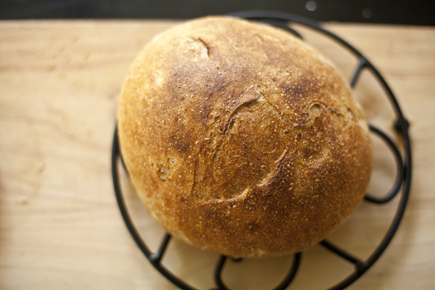
Not my slow-cooker bread
I did a quick web search for "slow cooker bread" since that Facebook page did not include the URL from which the pictures originated (a huge peeve of mine). Thankfully, the blog was easy to find, and you can read the original post here. She uses an artisan bread, which I cook regularly, so I was ready to go.

According to the directions, you place ~1 lb. of dough in your crock pot on parchment and turn it on high. In one hour, you have delicious bread! 

That sounds so simple.....

Here is my dough, ready to go, in my 8-quart slow cooker. I added the lid and turned it to high.
One hour later: the dough flattened (instead of rising) and was gummy and raw. The lid was beginning to take on a lot of moisture, so I cracked it a bit, so as not to soak the loaf. I held out hope.

Two hours later: still not done. I finally pulled it out around the 3-hour mark, and the results were...flat. Here you can see the crock loaf (l) next to one baked in the oven (r).
Despite these bad results, I remained undeterred. Perhaps the 8-quart slow cooker was too big or too hot. I read the comments on the original blog post and decided to try my 1-quart crock instead. A crock uses a lot less energy than an oven, plus no hot kitchen in summer, right? I had to give it another go.

Dough ready to go in my 1-quart crock. Fingers crossed.

Once again, it took several hours to achieve anything approximating "done."
While it did not flatten, due to lack of room in the crock, there was no rising.
Here, the "finished loaf" at 2-ish hours is not terribly appetizing.
Crockpot bread
Second crock loaf (l) is the same height as oven-baked (r), but horridly doughy and dense
due to lack of rise.  The oven loaf spreads a bit, then rises, and has a wonderful texture. I even put the top of the crock-"baked" loaf under the broiler, so it had an even color, but it tasted awful anyway.

 After having zero rise on the second loaf, I decided this method is not for me, unless I get helpful feedback in the comments. The artisan bread takes at most one hour, and I'd rather fire up the oven for a consistent, successful result loved by the whole family than keep trying at the crock.

If you get different results, let me know. If you're only moderately interested in slow-cooker bread, because you want to try something new, I recommend trying instead the Soft 100% Whole Wheat Dinner Rolls from An Oregon Cottage. They are soft and tasty...and I made them without a stand mixer, several times, with consistent, delicious results!

Tag Cloud

Make Your Own simplify Easy garden Inside My Fridge Living on Less recipes food frugal Live Well meal plan Tennessee Edible Landscaping Kitchen Garden organic Garden Tour Spring flowers Real American Food Use It All change vegetables Dinner Grow Your Own grow tomatoes Life Love Summer greens kids Family dinner recipes explore gift seeds Companion Plants Lettuce Reality Sink Saving Seeds bread freezer garlic squash Fall Inspiration Special Try It and See emotion moderation planting quick reduce Art Artisan Bread Beauty CSA Celebrations Cool Beverages Cucumber Experiment Featured Flood Sheet Mulch Small Changes Tea craft fruit reuse soup stock waste yogurt "sometimes food" Amaryllis Becky's Favorite Things Bloody Mary Blueberries Books Cabbage Chard Connections Date Night Edible Flowers Family Dinner Jacob's Ladder Lint No-till Organize Read Real Life TN Native Plant Trash Day Use the Oven Winter black-eyed susan chicken crock pot daily reminder essential oil garden pests kale leftovers permaculture plastic pork potatoes recycle rudbeckia seedling stir-fry strawberries swale trash vegetarian volunteer A-frame Authentic Authentic2 Bacon Baking Fail Better Homemade Body Balm Breakfast Build Soil Butter Carrots Chives Chocolate Milk Chocolate Syrup Christmas Clean Cookbook Review Crock Pot Bread Eat Local Faith Fire Cider Food as Medicine GM foods GMO Ginger HFCS Health Holy Honeysuckle Hot Cocoa Household cleaner Hydrangea Icebox Pickles Iced Mocha Immune Booster Iris Kitchen Sink Lent Life Notes Monsanto Morning Sink My Neighbor's Garden Pickles Placating with Plating PlantEaters Propagating Geraniums Sacred Salvia Leucantha School Lunch Sewing Slow Cooker Bread Slow Cooker Fail Spiderwort Spinach Spiritual Practice Spring roll Sprouts Thanksgiving Time-saving Tips Tincture Turkey Turmeric Victory Garden Vodka Water Kefir What Chefs Feed Their Kids basil bento berm birthday borage brassica broccoli cabbage worm cake canned tomatoes chili coconut compost dessert discipline eggplant eggplant parmesan fennel flour food waste frosting gluten green beans greenhouse grocery healthy hair healthy scalp hornworm hugelkultur icing knead kneading kohlrabi landfill lasagna garden nasturtium natural hair wash no poo pancakes parsley patience pests pizza plantain potager processed sangria seed pot smoothie standing desk substitute for dill tarragon teacher appreciation teacher gift vegan water window crayons yeast

Eat Locally!